
Conveyancing FAQs
Understanding the legal steps can make it easier to plan your move. I’ve brought together a guide to the process and answers to common questions about conveyancing in England and Wales.
What is conveyancing?
Conveyancing is the legal work involved in transferring a property from one owner to another. It covers the documents, checks and arrangements needed for the sale or purchase.
For a buyer, that means investigating the legal information about the property and raising questions before committing to the purchase. For a seller, it includes providing information about the property and dealing with the buyer’s enquiries.
The work depends on the transaction. A leasehold flat, a newly built home and a linked sale and purchase can each bring different information and arrangements to consider.
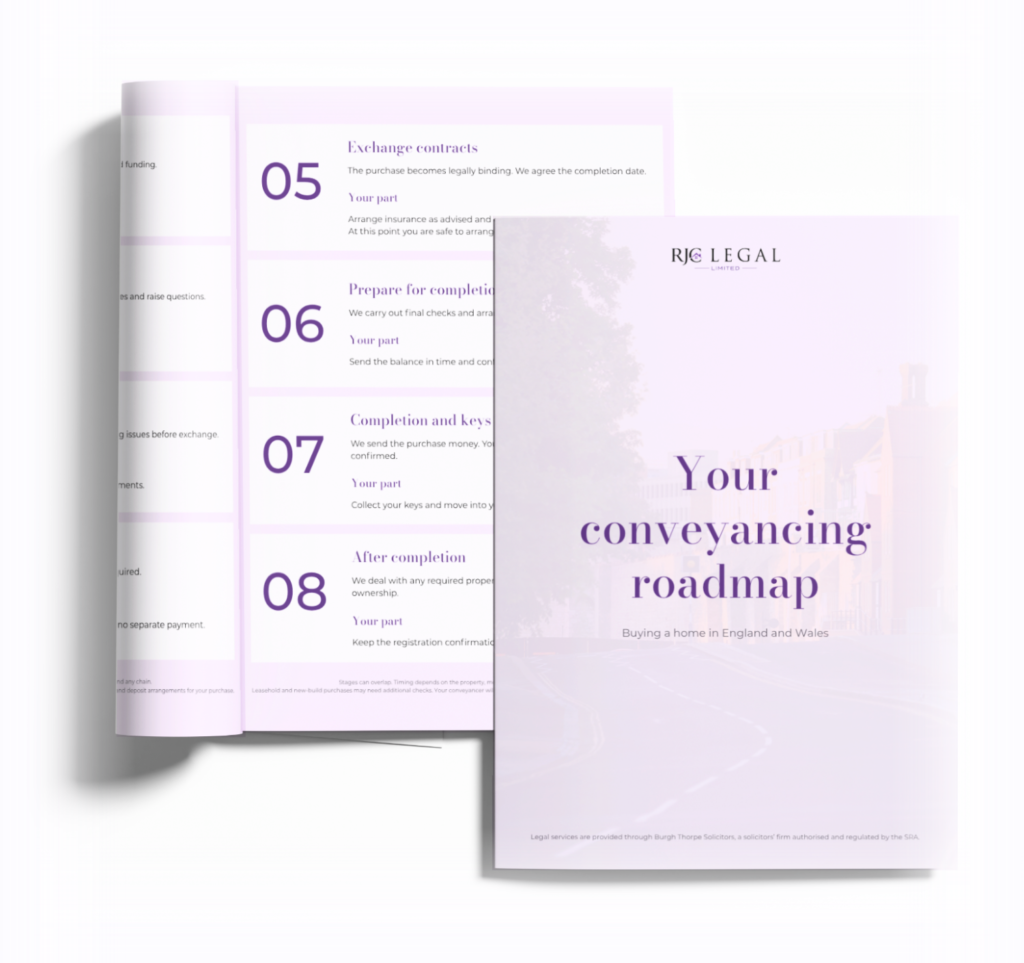
Your conveyancing roadmap
Take a look at my conveyancing roadmap for an overview of the process. Download a copy to refer to as your move progresses.
The main stages of a move
These stages outline a conventional sale or purchase in England and Wales. Auction purchases and some new-build arrangements work differently, so the terms of your own transaction matter.
Preparation and checks
Your property information, contract and relevant checks are reviewed. Questions are raised so you can understand the legal position before deciding whether you are ready to proceed.
Exchange of contracts
Contracts are exchanged once the necessary legal arrangements are in place and you have agreed to proceed. You and the other party then become legally committed to the transaction.
Completion and moving
The remaining money is transferred and completion takes place under the contract. For a home you are moving into, the keys can then be released once completion has been confirmed.
After completion
Moving day does not always mark the end of the legal work. A purchase can still involve the relevant property tax return and an application to HM Land Registry.
Registration is a separate stage and may be completed after you have moved in. The work required depends on the transaction, so I will explain what remains to be dealt with on your matter.
A useful starting point
You do not need all the answers before getting in touch. If you are unsure about the property, the paperwork or where to begin, tell me what you know and what you would like to understand.
This guide gives general information about residential conveyancing. The advice you need will depend on your property, the transaction and your circumstances.
Your conveyancing questions
Choose a topic below to find the information most relevant to your move.
Getting started
When should I get in touch?
You can contact me when you are beginning to plan a sale or purchase. An initial conversation gives us a chance to discuss the transaction and the information needed for an estimate.
If you have already agreed a sale, reserved a new home or have an auction date approaching, mention that when you enquire.
Do I need to live near Peterborough?
You do not need to live near Peterborough. I work with residential property transactions across England and Wales, and we can usually speak by phone or email.
If you would prefer to meet, face-to-face appointments can be arranged at Burgh Thorpe Solicitors in Peterborough.
How long will my conveyancing take?
There is no single timescale that applies to every move. Progress depends on the property, any linked transactions and how quickly the necessary information becomes available. Mortgage arrangements, search results and replies to enquiries can all affect the timing.
I will explain what needs to happen on your matter and keep you informed as it progresses. Tell me about any dates you are hoping to work towards, but avoid treating a proposed moving date as confirmed.
Can you help if I am selling and buying?
I can handle a linked sale and purchase, considering how the two transactions fit together. Let me know about both properties and whether you need the sale proceeds to fund your purchase.
The timing will also depend on anyone else in the chain. A delay in one transaction can affect the others, so dates need to be considered together.

Costs and deposits
What information is needed for an estimate?
Please share the names and contact details of everyone who will be a client, the type of transaction, the property address and the agreed or estimated price.
For a purchase, it also helps to know whether you are a first-time buyer or buying an additional property. Mention whether the property is freehold, leasehold, new build, shared ownership or unregistered, if you know. If any details are still uncertain, say so and we can discuss what is needed.
Why might I pay 10% at exchange if my contribution is 20%?
The exchange deposit and your overall contribution serve different purposes. The exchange deposit is paid under the contract and is commonly 10% of the purchase price, although the amount can vary. It normally forms part of your overall contribution, rather than an extra payment on top.
For example, on a £400,000 purchase with a 20% contribution, you would contribute £80,000 altogether. If £40,000 is paid as the exchange deposit, the remaining £40,000 of your contribution would be needed for completion, alongside the £320,000 mortgage. Fees and any tax are separate.
I will explain the deposit arrangements and the funds required for your transaction before exchange.
Is property tax the same in England and Wales?
Purchases in England fall under Stamp Duty Land Tax (SDLT), while Wales has a separate tax called Land Transaction Tax (LTT).
The rules, rates and reliefs differ. The amount due depends on the transaction and your circumstances, including whether you already own another property. Being a first-time buyer does not automatically mean there is no tax to pay. Your position needs to be checked under the rules that apply to the property.
Checks and paperwork
What are conveyancing searches?
Searches provide information about a property and its surroundings that may not be apparent from a viewing. Common searches cover local authority information, water and drainage, and environmental matters.
Additional searches may be appropriate for a particular property or location. The results help identify points that need further investigation before you commit to buying. Searches form part of the legal checks; they do not replace a survey of the property’s condition.
Do I need searches if I am buying without a mortgage?
Buying without a mortgage does not remove the property risks that searches investigate. I can explain the searches appropriate to the property so that you can make an informed decision about proceeding and understand what might remain unknown.
If a mortgage is involved, the lender’s requirements must also be met. The checks needed should be considered for the individual transaction.
Is a mortgage valuation the same as a survey?
A mortgage valuation assesses the property as security for the loan, mainly for the lender’s benefit. A survey examines the property’s condition.
A suitable survey can help you understand defects and likely repairs before you commit to the purchase. Ask a qualified surveyor which level of inspection suits the property, and raise any concerns before exchange.
Why do I need to show where my money came from?
Law firms must carry out checks to help prevent money laundering. This includes understanding where the money used for a property transaction came from, rather than simply seeing that it is in a bank account.
Depending on the circumstances, evidence might relate to savings, a previous property sale, an inheritance or money given by someone else. The information needed depends on the source of the funds and the checks required for your matter.

Exchange, completion and moving
What is exchange of contracts?
Exchange is the point at which the buyer and seller become legally bound to the contract. It takes place through their legal representatives once the arrangements are ready and they have authorised it.
For a conventional purchase, the completion date is normally agreed as part of those arrangements. Some transactions, including new builds, use different terms. Withdrawing after exchange can have serious financial consequences, so any concerns should be resolved before you commit.
When can I collect the keys?
For a home you are moving into, the keys are normally released once completion has been confirmed. This follows the transfer of the purchase money and the necessary completion arrangements.
There is no guaranteed collection time. Money may need to pass through several transactions in a chain, and delays can affect when the keys become available. Wait for confirmation before expecting access to the property.
When should I book removals?
You can obtain quotes and check availability while the conveyancing is progressing. For a conventional purchase, wait until contracts have exchanged and the completion date is agreed before committing to a fixed moving booking.
Before exchange, the date can still change and the transaction may not proceed. If you are buying a new build or exchanging and completing on the same day, discuss the arrangements first and check the removal company’s cancellation terms.
Can exchange and completion happen on the same day?
Exchange and completion can happen on the same day, although this will not suit every transaction. The legal work, documents and funding arrangements must be ready, and everyone involved must be able to proceed.
Practical plans are less certain beforehand because the contract is not binding until exchange. I can discuss whether this approach suits your move and what it would mean for your arrangements.
Different property arrangements
What is the difference between freehold and leasehold?
With freehold, you own the property and the land it stands on. With leasehold, you own an interest in the property for the remaining term of a lease. The lease sets out rights, responsibilities and restrictions.
For a leasehold purchase, the length of the lease and any service charges or other payments need attention. Freehold ownership can also come with restrictions or charges, so the title and relevant documents still need to be checked.
What should I know about a new-build completion date?
If the home is still being built, the developer’s estimated finish date may not be a fixed contractual completion date. The contract may provide for completion after the developer serves notice that the home is ready.
The notice period and any rights if construction is delayed depend on the contract and any applicable protection scheme. I will explain those terms before exchange. It is important to understand them when planning removals, a linked sale or the timing of your mortgage offer.
How does shared ownership affect the legal work?
Shared ownership allows you to buy a share of a home and pay rent on the share retained by the provider. The legal work includes reviewing the lease and the scheme’s terms, alongside the usual property checks.
You need to understand the ongoing payments, maintenance responsibilities and rules for selling or buying further shares. Arrangements differ between schemes, and the rules in England and Wales are not identical. The documents for your particular home need to be considered.
Should I seek advice before bidding at auction?
Before bidding at auction, have the legal pack and auction terms reviewed and make sure you understand the funding and completion deadlines. At an unconditional auction, a successful bid normally creates a binding contract when the hammer falls.
Conditional auctions work differently and may involve a reservation period and fees before exchange. Do not assume that an online auction uses a particular method. Check the terms for the property, including any additional costs and what happens if you cannot proceed.
What is a simple declaration of trust?
A declaration of trust can record the owners’ respective financial interests in a property. It may be useful where you want to set out how the proceeds of a future sale should be shared.
I can help with simple declarations of trust connected with these arrangements. Tell me what you intend so that we can discuss whether this is appropriate for your circumstances.

Have a question about your move?
Tell me about your property and what you would like to understand. We can discuss your plans and the next steps for your enquiry.